


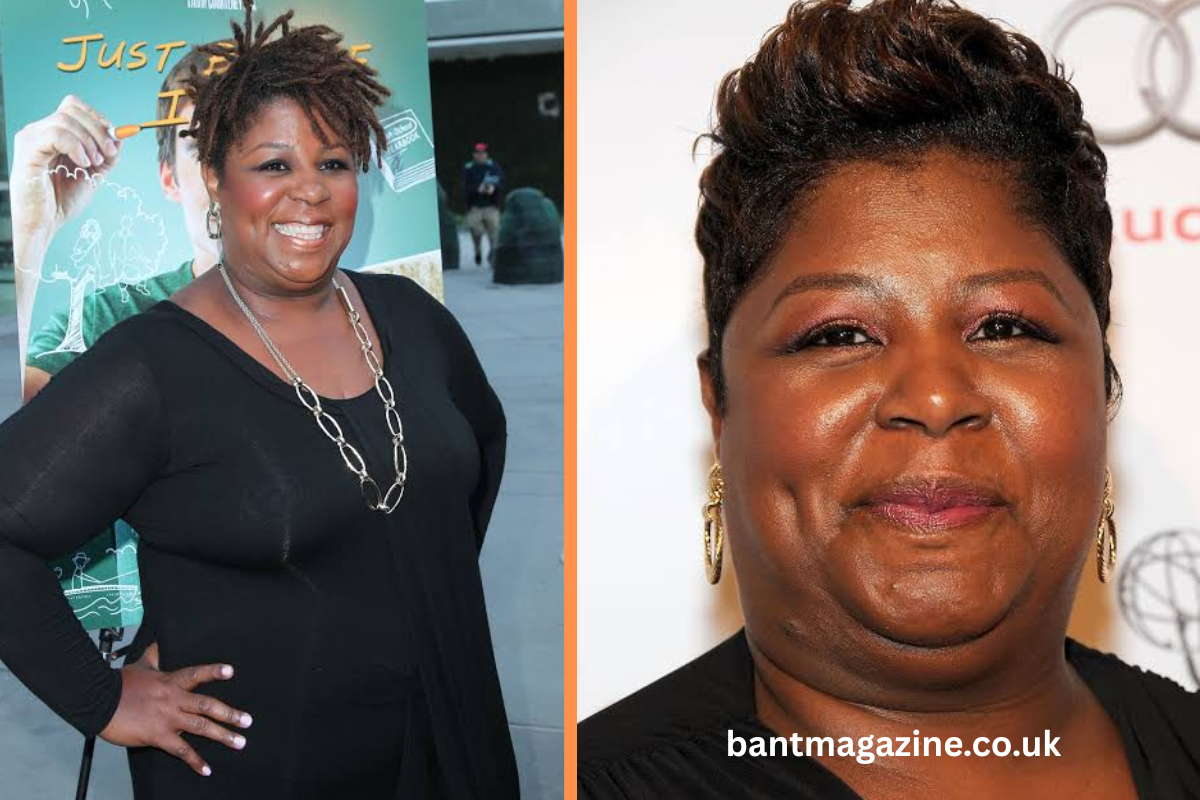
Cleo King is an American actress known for her memorable performances in television comedies, dramas, and feature films. With a career spanning several decades, she has built a reputation for bringing warmth, humor, confidence, and personality to a wide range of characters. Many viewers recognize her from popular television productions, where her expressive acting and natural screen presence have helped her stand out in both supporting and recurring roles.
Although Cleo King is not always the first name mentioned when people discuss Hollywood stars, her contributions to American entertainment are worth exploring. Her career demonstrates how experienced character actors help create the memorable scenes, relationships, and storylines that audiences enjoy. From television sitcoms to films, she has shown versatility across different genres. This article explores Cleo King’s biography, acting career, notable roles, personal life, achievements, and lasting place in the entertainment industry, while distinguishing publicly established information from details that remain private or uncertain.
Who Is Cleo King?
Cleo King is an American actress recognized for her work in television and film. She is particularly associated with character acting, a field in which performers bring supporting characters to life and help make fictional worlds feel authentic.
Character actors are essential to successful productions. They portray parents, teachers, neighbors, coworkers, authority figures, and other personalities who add depth to a story. Cleo King’s career reflects the importance of these roles in television and cinema.
Her performances have reached audiences through a variety of productions, demonstrating an ability to work within different storytelling styles. Comedy often depends on precise timing and expressive reactions, while drama requires emotional control and a convincing connection with other performers. Actors who can adapt to both forms bring considerable value to casting directors and production teams.
Cleo King’s professional identity is therefore best understood through her body of acting work rather than through celebrity headlines alone. Her career provides an example of the experience, flexibility, and consistency required to sustain a presence in a competitive entertainment industry.
Cleo King Biography at a Glance
The following table summarizes the main publicly documented details about Cleo King.
| Category | Details |
|---|---|
| Full name | Harriet Cleo King |
| Professional name | Cleo King |
| Date of birth | August 21, 1962 |
| Birthplace | St. Louis, Missouri, United States |
| Nationality | American |
| Profession | Actress |
| Known for | Television sitcoms, dramas, and films |
| Notable television role | Rosetta McMillan in Mike & Molly |
| Other notable roles | Aunt Lou in Deadwood and Eleanora Poe in A Series of Unfortunate Events |
| Education | Studied Speech and Dramatic Arts at the University of Missouri |
| Years active | Since the late 1980s |
These details provide a starting point for understanding her background and career. Some personal information, including details about her relationships and family life, is not widely documented in reliable public biographies.
Early Life and Background
Growing Up in St. Louis, Missouri
Cleo King was born in St. Louis, Missouri, a city with a rich cultural history and a strong connection to American music, theater, and the performing arts. Her early life preceded the career that would eventually bring her into television and film.
Although she has established a professional identity in Hollywood, detailed accounts of her childhood remain limited. Information about her parents, siblings, and early family experiences should not be assumed when it has not been publicly confirmed.
Her eventual decision to study dramatic arts suggests that acting became an important professional interest. Pursuing a career in performance requires more than an interest in entertainment. It demands the ability to understand characters, communicate emotions, and work collaboratively with other people.
For aspiring actors, King’s background offers a useful reminder that a professional acting career can develop through education, training, and steady experience rather than immediate celebrity.
Family Influence and Early Interests
Public biographies provide limited information about the specific people who influenced King during childhood. It would therefore be inaccurate to attribute her career to particular family members without reliable confirmation.
However, her later academic choices indicate a willingness to develop her communication and performance abilities. Studying theater-related subjects can help students understand how stories are structured, how dialogue works, and how performers communicate with audiences.
These foundations are particularly valuable for character actors, who frequently need to establish a believable personality within a limited amount of screen time.
Education and Acting Interests
Studying Speech and Dramatic Arts
Cleo King pursued studies in Speech and Dramatic Arts at the University of Missouri in Columbia. Her educational background is an important part of her story because it connects her acting career with formal training.
Speech and dramatic arts can provide several practical skills for performers:
-
Voice projection and clarity.
-
Effective delivery of dialogue.
-
Physical expression and movement.
-
Character interpretation.
-
Public speaking and confidence.
-
Collaboration with directors and fellow performers.
These skills are useful across television, film, theater, voice acting, and other performance-based professions.
Overcoming Early Hesitation
Biographical information about King indicates that she was initially too shy to audition for acting roles during her first year of college. She later appeared in the play To Be Young, Gifted and Black during her sophomore year.
This detail adds an important human dimension to her career. Acting may look effortless when experienced performers appear on screen, but the process of becoming comfortable before an audience can take time.
Her experience also illustrates why training environments matter. Students can use college productions and theater exercises to practice performing before they enter the highly competitive professional entertainment industry.
For a beginner, the practical lesson is straightforward: confidence does not always come before action. Sometimes it develops through repeated participation, feedback, and experience.
Read More: Lyliana Wray: Biography, Career, Movies, TV Shows, and Personal Life
How Cleo King Started Her Acting Career
Early Television Appearance
King’s screen career began with an appearance on The Cosby Show in 1988. This marked an early step in her transition from studying performance to working in professional television.
Getting an opportunity on an established television production can introduce an actor to the practical realities of filming, including working with a production crew, following direction, and delivering a performance within a scheduled shooting day.
Early roles do not always bring immediate recognition. Many actors build their careers through guest appearances, small parts, auditions, and recurring opportunities that gradually expand their professional experience.
King followed this general career path, accumulating credits across television and film before becoming associated with more recognizable roles.
Building Experience Through Supporting Roles
During the 1990s, King appeared in productions such as Living Single, The Wayans Bros., Hangin’ with Mr. Cooper, and Murphy Brown. These appearances helped establish her as a working performer in American television.
Supporting roles can be demanding because actors must communicate a character’s personality quickly. A brief scene might require a performer to convey authority, humor, frustration, or affection in only a few lines.
For example, an actor playing a school administrator needs to sound credible within a school setting, while an actor playing a family member in a sitcom must establish a believable relationship with the other characters. These seemingly small details help an entire production feel convincing.
King’s growing collection of television credits demonstrates the value of gaining experience across different productions instead of relying on a single breakthrough role.
Cleo King’s Television Career
Television has been one of the most significant parts of Cleo King’s professional life. Her credits span sitcoms, crime dramas, supernatural stories, animated programs, and family-oriented productions.
Rather than being associated with only one genre, she has repeatedly adapted to different creative environments.
Boston Public
One of King’s early recurring television roles was Helene Parks in the Fox drama Boston Public, appearing during 2001 and 2002. The series explored the challenges faced by teachers, administrators, and students in an American public high school.
The show’s school setting provided opportunities for stories involving professional responsibility, student behavior, family relationships, and the challenges of managing an educational institution.
Recurring appearances can help an actor establish a more developed character than a single guest role allows. They also require continuity, since the performer must maintain the character’s personality and relationships across multiple episodes.
Deadwood
King appeared as Aunt Lou in the third and final season of the HBO Western drama Deadwood in 2006. She returned to the role in Deadwood: The Movie in 2019.
Deadwood is known for its historical atmosphere, complex characters, and stories about power, business, law, and community in a frontier settlement.
Working in a period drama differs from acting in a contemporary sitcom. Performers must fit the production’s historical environment, including its dialogue, costumes, social relationships, and dramatic tone.
King’s participation in both the original series and its later film continuation demonstrates how a character can remain part of a production’s world beyond its initial television run.
Sons of Anarchy
In 2009, King played Neeta, the nanny of Jax Teller’s son, in the FX crime drama Sons of Anarchy. Her appearance connected her to a series centered on a motorcycle club and the complicated personal relationships surrounding its members.
The show combined crime, family conflict, loyalty, and moral dilemmas. Even supporting characters could contribute important emotional context to the central storyline.
This role illustrates King’s presence in dramatic productions that differ significantly from the family comedy for which many viewers know her.
Mike & Molly
One of King’s best-known roles is Rosetta McMillan, affectionately called Grandma, in the CBS sitcom Mike & Molly. The show premiered in 2010 and followed a couple whose relationship develops alongside their work, friendships, and family lives. King played Molly’s grandmother, a character who contributed humor and family perspective to the series.
Her performance helped establish Grandma as a recognizable part of the show’s family dynamic.
The character works because family sitcoms often depend on differences between generations. Older relatives can offer advice, challenge younger characters, or make unexpected observations that move a scene in a humorous direction.
King’s role is also an interesting example of casting. She played a grandmother to a character portrayed by Reno Wilson, who is only several years younger than her in real life. This demonstrates that screen relationships are shaped by performance, costume, writing, and casting decisions rather than age alone.
For viewers exploring Cleo King’s career, Mike & Molly is an especially useful starting point because it showcases her work in a recurring comedy role.
A Series of Unfortunate Events
King appeared as Eleanora Poe in Netflix’s adaptation of A Series of Unfortunate Events, which began in 2017. The production follows the Baudelaire children as they encounter difficult circumstances and the schemes of Count Olaf.
The series combines dark comedy, mystery, literary references, and exaggerated characters. Its distinctive tone requires performers to balance serious storytelling with unusual and sometimes absurd situations.
King’s appearance in this production shows her ability to work within a stylized television environment rather than exclusively in realistic dramas or traditional sitcoms.
Other Notable Television Appearances
King’s television work includes a range of familiar productions.
| Television show | Role or contribution | Career significance |
|---|---|---|
| The Cosby Show | Cleo | Early screen appearance |
| Living Single | Geraldine | Early sitcom credit |
| Gilmore Girls | Esther | Guest role in a popular comedy-drama |
| Friends | Guest appearance | Participation in a major American sitcom |
| Lost | Tamara Fry | Appearance in a mystery drama |
| Bones | Minister Sheila | Guest role in a crime procedural |
| New Girl | Sergeant Dorado | Comedy guest appearance |
| Fresh Off the Boat | Judge Patty O’Brien | Role in a family sitcom |
| Young Sheldon | Mrs. Costello | Appearance in a family comedy |
| Mom | Sandy | Guest role in a sitcom |
| Grey’s Anatomy | Robin | Appearance in a medical drama |
| 9-1-1: Lone Star | Cynthia Strickland | Role in a first-responder drama |
| Hoops | Opal Lowry | Voice performance in adult animation |
These credits illustrate the breadth of King’s television experience. They also show why her name may be familiar to viewers who recognize individual characters but do not immediately recall the actor’s name.
Cleo King Movies and Film Career
Alongside television, Cleo King has appeared in a broad range of films, from independent dramas to commercially successful comedies. Her filmography demonstrates the versatility required of an actor who frequently works within ensemble casts.
Magnolia
King appeared as Marcie in Magnolia, the 1999 drama directed by Paul Thomas Anderson. The film brings together several interconnected stories involving family relationships, regret, loneliness, and the possibility of personal change.
The ensemble structure of Magnolia makes supporting performances particularly important. Each character contributes to a wider picture of human behavior, even when individual characters have limited screen time.
For actors, a film of this kind requires careful attention to tone. Performances must feel natural within a story that moves between intimate personal moments and emotionally intense situations.
Dude, Where’s My Car?
In the 2000 comedy Dude, Where’s My Car?, King played an authority figure associated with the characters’ search for their missing vehicle.
The film follows two young men who wake up after a night of partying and attempt to reconstruct what happened. Its humor relies on confusion, absurd situations, and increasingly strange encounters.
King’s work in comedy is relevant because authority figures often provide a useful contrast to chaotic protagonists. A calm or serious character can make an already ridiculous situation even funnier.
This type of supporting performance illustrates how an actor can contribute to a film’s humor without needing to be the central character.
Bubble Boy
King appeared in Bubble Boy, a 2001 comedy featuring Jake Gyllenhaal as a young man who lives with a severely compromised immune system and ventures beyond his protected environment.
The movie uses an exaggerated premise to explore independence, romantic desire, and the experience of confronting an unfamiliar world.
King’s appearance added another credit to her developing film career during a period when she was also working in television.
The Life of David Gale
In the 2003 drama The Life of David Gale, King played Barbara Kreuster. The film follows a university professor facing execution for a crime and examines questions involving justice, evidence, and the death penalty.
This production differs considerably from the broad comedy of Dude, Where’s My Car?. Its subject matter is serious, and its narrative depends on suspense and the gradual presentation of information.
Moving between such different productions requires an actor to understand the tone of each project. A dramatic role may call for restraint and realism, while a comedy may require more pronounced reactions and precise timing.
National Security
King also appeared in National Security, a 2003 action comedy starring Martin Lawrence and Steve Zahn.
The film combines police-related situations, physical comedy, and a story about two men who become involved in law enforcement circumstances. It provided another opportunity for King to work within a mainstream comedy production.
Dogville
In 2003, King appeared as Olivia in Dogville, a drama directed by Lars von Trier. The film is notable for its minimalist stage-like setting and its exploration of community, power, exploitation, and morality.
Its unconventional visual style places considerable emphasis on acting and dialogue. Instead of relying on elaborate sets, the film asks viewers to focus on character behavior and the relationships between people.
For a character actor, participating in a production with such a distinctive approach offers a different professional experience from working on a conventional Hollywood comedy.
Dreamgirls
King appeared in Dreamgirls, the 2006 musical drama inspired by the history of American soul music and the entertainment industry.
The film focuses on ambition, fame, relationships, and the costs of success. It also demonstrates the importance of supporting performers in productions that combine acting, music, and large ensemble scenes.
Although King’s contribution was not a leading role, the film represents another example of her work across different styles of American cinema.
Pineapple Express
In the 2008 action comedy Pineapple Express, King played a police liaison officer. The film stars Seth Rogen and James Franco and combines crime, action, and absurd humor.
The film’s fast-moving scenes depend on the contrast between characters who are caught up in unusual circumstances and the people attempting to respond to them.
King’s appearance is consistent with her recurring use of authority figures and supporting characters to contribute to a story’s comic or dramatic tension.
The Hangover
King played Officer Garden in The Hangover, the 2009 comedy about a group of friends trying to reconstruct a bachelor-party night after waking up in Las Vegas with no clear memory of what happened.
The movie became a major commercial comedy and is one of the recognizable titles in King’s filmography.
The film’s premise creates opportunities for humor through confusion, unexpected discoveries, and interactions with people who know more about the previous night’s events than the main characters do.
King’s participation in a widely watched comedy helped add another familiar title to her extensive screen résumé.
Transformers: Age of Extinction
King appeared in Transformers: Age of Extinction, the 2014 science-fiction action film directed by Michael Bay.
The movie belongs to a major franchise built around the conflict between the Autobots and Decepticons. Unlike a character-driven independent drama, a large franchise production involves extensive visual effects, action sequences, and a large cast.
Working in a blockbuster environment exposes performers to a different kind of filmmaking process, in which individual scenes become part of a much larger production.
Other Films Worth Knowing
Several additional films demonstrate the variety of King’s career.
| Film | Year | Role or contribution |
|---|---|---|
| Six Degrees of Separation | 1993 | Lieutenant Price |
| Road Trip | 2000 | Tina |
| Waking Up in Reno | 2002 | June |
| The Benchwarmers | 2006 | Martha |
| Towelhead | 2007 | Marlene |
| Sex Drive | 2008 | Sonya |
| Valentine’s Day | 2010 | TSA Supervisor Daisy Bell |
| Demoted | 2011 | Betty |
| Just Before I Go | 2014 | Berta |
| The Bye Bye Man | 2017 | Mrs. Watkins |
| Justine | 2019 | Cynthia |
| Ride the Eagle | 2021 | Missy |
The titles above represent selected credits rather than a complete filmography. Together, they illustrate King’s participation in comedy, drama, horror, and action-oriented storytelling.
Acting Style and Professional Strengths
Versatility Across Genres
One of the most notable characteristics of Cleo King’s career is her ability to work across several genres.
She has appeared in traditional sitcoms, dark comedies, crime dramas, supernatural stories, historical productions, and films designed for broad audiences.
Each genre creates different demands.
-
Comedy requires timing, rhythm, and an understanding of how audiences respond to a situation.
-
Drama often requires emotional subtlety and believable character relationships.
-
Crime stories depend on maintaining tension and fitting the atmosphere of the production.
-
Animation requires voice performers to communicate personality through vocal expression rather than facial movement.
King’s varied credits suggest a professional ability to adapt to these different environments.
Playing Authority Figures
A recurring element in King’s screen work is the portrayal of people in positions of responsibility, including officers, judges, and other institutional figures.
These characters often serve a practical storytelling purpose. They provide rules, information, consequences, or resistance to the main characters’ plans.
For example, a police officer in a comedy can become part of a joke when the protagonists behave irrationally. In a drama, a similar character might establish the seriousness of a situation.
The role may be relatively brief, but the performance still needs to feel convincing.
Comedy and Character Development
King’s work in Mike & Molly highlights another important strength: playing a recurring family character who can provide humor as well as perspective.
Successful sitcom performances require actors to understand both the immediate joke and the larger relationship between characters. A line can be funny because of its wording, the timing of its delivery, or the history between the people speaking.
Recurring characters also become familiar to viewers over time. Small gestures, vocal choices, and consistent behavior can help an audience recognize a character’s personality even before the dialogue begins.
The Importance of Supporting Actors
Supporting actors are often responsible for making a fictional world feel complete. They create the teachers, relatives, professionals, neighbors, and strangers who surround a story’s leading characters.
King’s career offers a practical example of how this work can build a substantial professional résumé without requiring constant lead roles.
For emerging performers, this is an important lesson. A well-executed supporting role can be valuable experience, strengthen professional relationships, and create opportunities for future work.
Cleo King’s Personal Life and Family
What Is Publicly Known?
Cleo King has maintained a relatively low public profile outside her professional work. Available biographies provide more information about her acting credits and education than about her private relationships.
Her full name is Harriet Cleo King, and she was born in St. Louis, Missouri. Beyond these established details, information about her immediate family is limited in widely available biographical records.
A responsible biography should not treat missing information as evidence of a particular personal circumstance. If reliable public sources do not confirm a spouse, partner, or children, it is better to acknowledge the uncertainty than to present speculation as fact.
Is Cleo King Married?
Publicly available biographical information does not establish a sufficiently reliable, detailed account of King’s current marital status.
For that reason, claims about a husband, a partner, or a divorce should not be presented as confirmed facts without stronger evidence.
Her professional life is much more thoroughly documented than her romantic relationships, and readers should distinguish between verified information and online speculation.
Does Cleo King Have Children?
Reliable, widely available biographical sources do not provide a comprehensive account of whether King has children.
The absence of a public record does not establish that she does or does not have children. Personal and family details should be treated with appropriate caution.
Interests Beyond Acting
King’s career has included different forms of performance, and her public professional profile also identifies her as a director and writer in addition to an actress.
However, specific claims about her daily routine, hobbies, financial circumstances, or private activities require reliable confirmation.
Respecting those boundaries allows readers to learn about her career without confusing professional information with unverified personal claims.
Public Image and Recognition
Cleo King is best known for her work as a character actress rather than for maintaining a celebrity lifestyle in the public eye. Her career is associated with recognizable television programs, popular comedies, and critically discussed dramatic productions.
Recognition Through Familiar Roles
Audiences often remember actors through individual performances rather than through a complete list of credits. A viewer might recognize King as Grandma from Mike & Molly or recall her appearances in The Hangover and Pineapple Express without immediately knowing her name.
This is a common feature of character acting. Supporting performers frequently appear in numerous productions, building familiarity through repeated exposure to different audiences.
King’s work across television and film has given her opportunities to reach viewers with different entertainment preferences.
Awards and Industry Recognition
King’s professional history includes a substantial collection of acting credits. However, the Television Academy’s biography page does not list Emmy nominations for her.
Awards are only one measure of an actor’s career. Other indicators include the variety of roles performed, the ability to sustain professional work, and participation in productions that remain familiar to audiences.
King’s career illustrates why performers should not be evaluated solely by the number of major awards they receive.
Challenges and Achievements in Hollywood
Working in a Competitive Industry
The entertainment industry is highly competitive. Actors often need to audition repeatedly, adapt to changing production schedules, and demonstrate that they can perform effectively under pressure.
For character actors, success may involve developing a recognizable professional style while remaining flexible enough to play very different people.
King’s career demonstrates the value of persistence. Her screen work extends from the late 1980s into more recent productions, reflecting continued involvement in entertainment over a substantial period.
Avoiding Typecasting
Typecasting occurs when performers are repeatedly offered similar roles because casting professionals associate them with a particular character type.
An actor who frequently portrays an authority figure, for example, may be considered for similar parts in multiple productions. While this can create a recognizable professional niche, it may also limit opportunities to explore other kinds of characters.
King’s appearances in sitcoms, period dramas, animated series, action films, and horror productions demonstrate a varied range of work.
Building a Sustainable Career
A sustainable acting career often depends on several factors:
-
Maintaining professional relationships.
-
Preparing thoroughly for auditions and performances.
-
Learning to adapt to different directors and production styles.
-
Developing reliable communication and collaboration skills.
-
Remaining open to guest roles and supporting parts.
-
Continuing to improve through experience.
These principles are useful for anyone interested in acting professionally. They also help explain how performers can remain active without becoming constant subjects of celebrity news.
Cleo King’s Influence on the Entertainment Industry
The Value of Character Actors
Cleo King’s career highlights the importance of performers who help build the supporting world around a story’s main characters.
Consider a family sitcom. The lead couple may drive the central plot, but parents, grandparents, neighbors, and coworkers create the relationships that make the fictional world feel realistic.
Similarly, a crime drama needs believable police officers, witnesses, judges, and community members. Even a short appearance can provide information or introduce a new complication.
These roles are often less visible in promotional material than leading performances, but they remain essential to effective storytelling.
Representation Across Different Roles
King has worked in productions that portray a wide variety of social environments, including schools, families, workplaces, and law enforcement settings.
Her career forms part of the broader history of Black performers working in American television and cinema across comedy and drama.
It is important not to assume that a single actor represents the entire experience of a community. Nevertheless, examining a performer’s range of roles can help readers understand how opportunities in the entertainment industry have developed over time.
A Career Worth Exploring
For viewers discovering Cleo King for the first time, her filmography provides several ways to explore her work.
Someone who enjoys family sitcoms might begin with Mike & Molly. Viewers interested in Western dramas can explore Deadwood, while comedy fans may prefer The Hangover or Pineapple Express.
This variety makes her career a useful example of how supporting actors contribute to many different kinds of entertainment.
Interesting Facts About Cleo King
The following facts provide a concise overview of aspects of King’s background and career.
1. Her full name is Harriet Cleo King. She is professionally known as Cleo King.
2. She was born in St. Louis, Missouri. Her listed birthday is August 21, 1962.
3. She studied dramatic arts. Her educational background includes Speech and Dramatic Arts at the University of Missouri.
4. Her screen career began in the 1980s. She appeared in The Cosby Show in 1988.
5. She has worked in several genres. Her credits include comedy, drama, crime stories, horror, and animation.
6. She played Grandma in Mike & Molly. This recurring role is among her best-known television performances.
7. She appeared in The Hangover. Her role as Officer Garden connected her to a widely recognized comedy.
8. She returned to a character from Deadwood. Her role as Aunt Lou appeared in the original series and its 2019 film continuation.
9. She has performed voice work. Her credits include Opal Lowry in the animated comedy Hoops.
10. Her career demonstrates the importance of supporting actors. Many of her roles show how smaller parts can contribute to memorable productions.
These facts offer a useful introduction without relying on unconfirmed claims about her private life.
Frequently Asked Questions About Cleo King
1. Who is Cleo King?
Cleo King is an American actress known for her work in television and film. She has appeared in productions including Mike & Molly, Deadwood, The Hangover, and Pineapple Express.
2. What is Cleo King’s real name?
Her full name is Harriet Cleo King. She uses Cleo King professionally.
3. How old is Cleo King?
Cleo King was born on August 21, 1962. As of October 14, 2026, she is 64 years old.
4. Where was Cleo King born?
She was born in St. Louis, Missouri, United States.
5. What is Cleo King best known for?
She is particularly recognized for playing Rosetta McMillan, also known as Grandma, in the CBS sitcom Mike & Molly. Her other notable credits include Deadwood, The Hangover, and Pineapple Express.
6. Was Cleo King in The Hangover?
Yes. King played Officer Garden in the 2009 comedy The Hangover, which follows a group of friends trying to reconstruct a chaotic night in Las Vegas.
7. Did Cleo King appear in Deadwood?
Yes. She portrayed Aunt Lou in the third season of the HBO series Deadwood and reprised the role in Deadwood: The Movie in 2019.
8. What did Cleo King study in college?
She studied Speech and Dramatic Arts at the University of Missouri in Columbia. Her education helped establish a foundation for her professional performance career.
9. Is Cleo King married?
Her current marital status is not clearly established by widely available, reliable public biographical information. Claims about her marriage or relationships should be treated cautiously unless independently confirmed.
10. Does Cleo King have children?
Comprehensive, reliably verified public information about her children is limited. It would be inappropriate to make a definite claim without confirmation.
11. Has Cleo King appeared in animated productions?
Yes. She voiced Opal Lowry in the Netflix adult animated comedy Hoops, released in 2020.
12. What makes Cleo King’s acting career notable?
Her career is notable for its longevity and variety. She has worked in sitcoms, dramas, films, and animation, demonstrating how character actors can contribute to many different forms of storytelling.
Conclusion
Cleo King has developed a substantial career as an American actress through years of work in television and film. From her early appearance in The Cosby Show to recognizable roles in Mike & Molly, Deadwood, The Hangover, and Pineapple Express, she has demonstrated an ability to contribute to productions with very different styles and audiences.
Her career also highlights the importance of character actors in the entertainment industry. Supporting performers help establish believable families, workplaces, communities, and institutions, making stories more engaging and convincing. King’s work across comedy, drama, and animation illustrates the flexibility required to succeed in this profession.
Although details about her private life remain limited, her professional accomplishments provide plenty of material for viewers interested in her background. For anyone researching Cleo King’s biography, the most meaningful starting point is her body of work and the range of characters she has brought to the screen.
