


Introduction
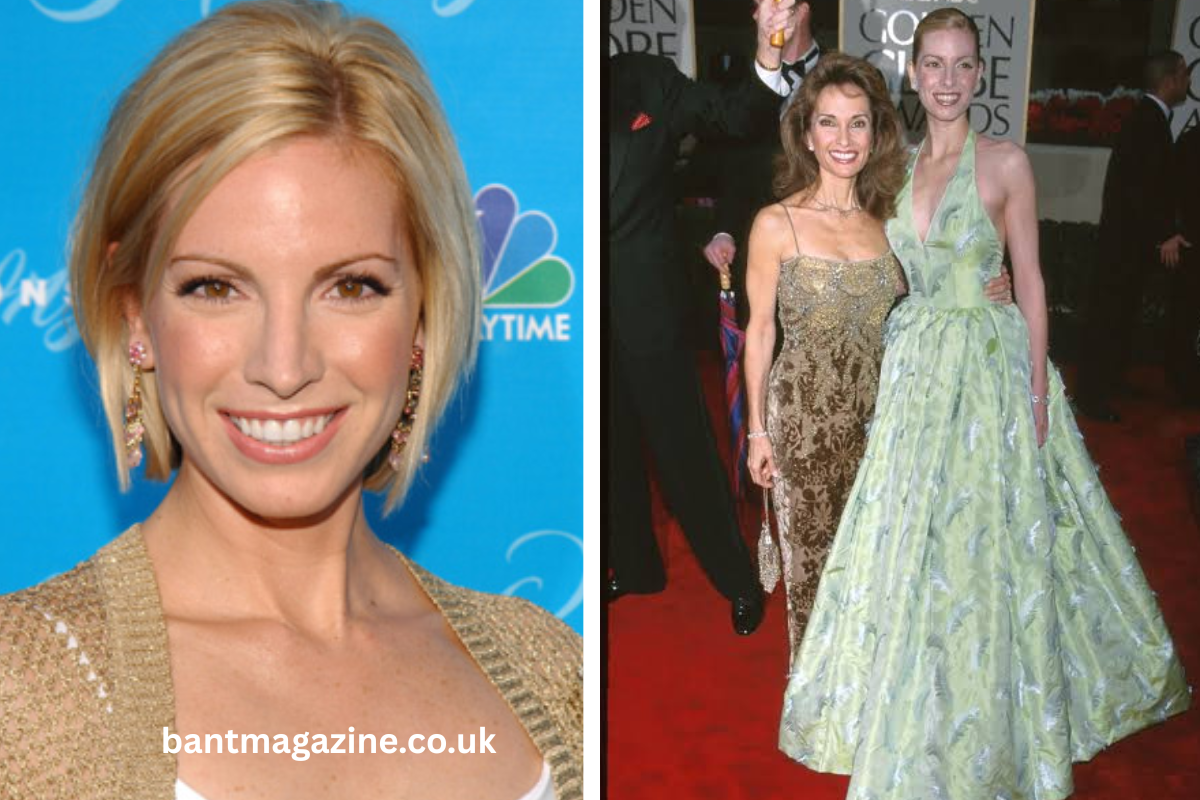
Liza Huber is an American former television actress and entrepreneur best known for playing Gwen Hotchkiss on the NBC daytime soap opera Passions. Born into a family familiar with the entertainment industry, she is the daughter of celebrated actress Susan Lucci and Austrian-born television producer Helmut Huber. Although her connection to a famous family introduced her to the world of television, Huber developed a career of her own before eventually pursuing opportunities outside acting. Her journey took her from daytime drama to entrepreneurship, including the founding of Sage Spoonfuls, a business focused on homemade baby food preparation and feeding products. Her life also reflects the changing priorities that can accompany marriage, parenthood, and professional reinvention. This comprehensive biography explores Liza Huber’s early life, education, acting career, family background, business ventures, and lasting public recognition.
1. Who Is Liza Huber?
Liza Huber, whose full name is Liza Victoria Huber, is an American former actress and businesswoman. She gained recognition for portraying Gwen Hotchkiss on Passions, a daytime television drama that premiered in 1999.
Born on February 22, 1975, on Long Island, New York, Huber grew up in a family with strong connections to television. Her mother, Susan Lucci, became one of the most recognizable performers in American daytime drama through her portrayal of Erica Kane on All My Children. Her father, Helmut Huber, worked as a television producer and business executive.
Huber initially followed a path into entertainment, appearing in television projects and developing her acting skills through professional training. Her role on Passions became the defining credit of her acting career.
However, her professional identity eventually expanded beyond television. After becoming a mother, she established Sage Spoonfuls, a business inspired by the practical needs of preparing food for babies and young children.
Liza Huber at a glance
| Detail | Information |
|---|---|
| Full name | Liza Victoria Huber |
| Date of birth | February 22, 1975 |
| Birthplace | Long Island, New York, United States |
| Nationality | American |
| Profession | Former actress and entrepreneur |
| Best-known television role | Gwen Hotchkiss on Passions |
| Mother | Susan Lucci |
| Father | Helmut Huber |
| Brother | Andreas Huber |
| Husband | Alexander George Hesterberg III |
| Children | Four |
| Business venture | Sage Spoonfuls |
| Education | University of North Carolina at Chapel Hill |
These details provide a useful introduction to Huber’s life, but her story extends beyond her relationship with a famous actress or her years in television.
2. Early Life and Family Background
Liza Huber was born and raised in Long Island, New York, in a family familiar with the demands of professional entertainment.
Her mother, Susan Lucci, was already building a successful acting career when Huber was born. Lucci became internationally associated with All My Children, the long-running ABC soap opera in which she portrayed Erica Kane. The character’s complicated relationships, ambitious personality, and dramatic storylines helped make Lucci a major figure in daytime television.
Huber’s father, Helmut Huber, was an Austrian-born television producer and business executive. He was an important part of the family’s personal and professional background, providing a perspective on business that complemented Lucci’s experience in entertainment.
Liza grew up alongside her younger brother, Andreas Huber. Although their parents’ careers attracted public attention, the family also maintained a private life away from television cameras.
Growing up around the entertainment industry
Having a parent in the entertainment business can offer early exposure to acting, production, publicity, and the professional demands of television. For Huber, her mother’s career made the industry familiar rather than entirely mysterious.
However, growing up around a successful performer does not automatically guarantee a lasting career. Acting requires its own skills, preparation, and commitment. Huber pursued those elements while developing her own professional identity.
Her later decision to leave acting also demonstrates that early exposure to a particular industry does not necessarily determine someone’s long-term career.
The influence of her family
Huber’s background is relevant to understanding her public recognition, but it should not overshadow her individual achievements. She built a television résumé of her own and subsequently pursued a business venture based on her experience as a parent.
The combination of entertainment connections, education, family life, and entrepreneurship helps explain why interest in Liza Huber continues long after her most prominent television role.
3. Education and Interest in Acting
Education was an important part of Huber’s development before and during her early professional career.
She attended the University of North Carolina at Chapel Hill, where she studied communication and media-related subjects. This educational background was relevant to understanding the broader world of media, production, and public communication.
Following her undergraduate studies, Huber pursued acting training in New York. She studied at the Terry Schreiber Studio and developed her performance skills through additional professional instruction.
Why formal acting training matters
Acting involves much more than memorizing lines. Professional performers must understand character motivation, emotional expression, timing, movement, and how to respond naturally to other actors.
Training can help actors develop several essential abilities:
- Character development: Understanding a character’s motivations and personality.
- Voice and delivery: Communicating emotion clearly through dialogue.
- Scene work: Responding convincingly to other performers.
- Emotional control: Moving between different emotional states while remaining believable.
- Audition preparation: Presenting a character effectively within a limited amount of time.
For a television performer working on a soap opera, these abilities are especially useful because productions often require actors to learn substantial amounts of dialogue and perform scenes on demanding schedules.
Huber’s training helped prepare her for professional acting opportunities, including the role that would become most closely associated with her name.
4. Liza Huber’s Acting Career
Liza Huber’s acting career developed during the 1990s, when daytime television continued to provide opportunities for performers to build recognizable careers.
Her early appearances included a small, uncredited role in Ebbie, a 1995 television film starring Susan Lucci. She also appeared in other entertainment projects before gaining wider recognition through Passions.
Early television experience
Early roles can help performers learn the practical realities of working on a set. Even a brief appearance can provide experience with camera positioning, production schedules, scene preparation, and collaboration with directors and cast members.
For emerging actors, such work can be a stepping stone toward more substantial opportunities.
Huber’s early credits placed her in the entertainment industry before she secured a regular role on a nationally broadcast daytime drama.
Read More: Heidi Van Pelt: Biography, Career, Marriage, and Life Beyond the Spotlight
Building a professional identity
Because Huber was Susan Lucci’s daughter, public interest in her acting career naturally included comparisons with her mother. Nevertheless, the two actresses became associated with different fictional characters and separate television productions.
Lucci was famous for portraying Erica Kane, while Huber became known for playing Gwen Hotchkiss on Passions.
Their shared profession gave journalists and viewers an obvious point of comparison, but Huber’s career developed around her own projects and decisions.
5. Her Breakthrough Role in Passions
Liza Huber’s best-known acting role was Gwen Hotchkiss on the NBC daytime soap opera Passions.
The series premiered in 1999 and developed a distinctive identity through a mixture of traditional soap-opera romance, family conflict, supernatural storylines, and exaggerated dramatic twists.
Huber originated the character of Gwen Hotchkiss, a socially prominent young woman whose relationships and personal ambitions became central to several storylines.
Who was Gwen Hotchkiss?
Gwen Hotchkiss was presented as an intelligent, confident woman from a wealthy family. Her character was involved in complicated romantic and interpersonal conflicts, particularly those involving Ethan Winthrop and Theresa Lopez-Fitzgerald.
Gwen’s relationships generated tension because the characters had competing expectations, emotional attachments, and different ideas about love and commitment.
These conflicts provided the kind of continuing dramatic material that daytime soap operas rely on to maintain audience interest.
Why the role mattered
A regular soap-opera role can be demanding because stories evolve over time rather than being resolved in a single episode. Actors must maintain continuity in their characters while responding to new plot developments.
Huber’s portrayal of Gwen helped establish her as a recognizable face among daytime television viewers.
The role also provided sustained professional experience in a genre that requires consistency, quick preparation, and the ability to communicate complex emotions.
Huber’s temporary departure and return
Huber initially left Passions in 2000. During her absence, actress Natalie Zea took over the role of Gwen.
Huber later returned to the series in 2002, resuming the character she had originated. She continued playing Gwen until the show’s final period in 2008.
This departure and return are important parts of her career because they show that her relationship with the role was not limited to its initial casting. Her return restored the original performer to a character that audiences had followed through numerous storylines.
The significance of Passions in her career
For many people searching for Liza Huber today, Passions remains the clearest connection to her acting career.
The series established her public profile, provided her most recognizable television credit, and continues to be a reference point in retrospective coverage of the show’s cast.
Although Huber later pursued different professional goals, Gwen Hotchkiss remains the role most closely associated with her name.
6. Other Television and Stage Appearances
Although Passions was Huber’s most prominent acting credit, it was not her only entertainment experience.
Her career also included television appearances, a film credit, and stage work.
Ebbie
Huber appeared in the 1995 television film Ebbie, a contemporary adaptation of Charles Dickens’s A Christmas Carol. The film starred Susan Lucci and gave Huber an early connection to screen acting.
Her appearance was uncredited, making it a smaller entry in her professional history than her later television work.
Hollywood Squares
Huber also appeared on Hollywood Squares, a television game show in which celebrities participated in a tic-tac-toe-style format.
Game-show appearances differ from scripted acting because performers generally appear as themselves rather than portraying fictional characters. Such appearances can introduce audiences to a celebrity’s personality outside a dramatic role.
Stage experience
Huber participated in a production of Four Dogs and a Bone at New York’s Harold Clurman Theatre. The play, written by John Patrick Shanley, explores competition and power struggles within the entertainment industry.
Stage work requires a different approach from television. Actors must sustain their performances for a live audience, project their voices appropriately, and maintain concentration throughout each performance.
Her stage experience added another dimension to her entertainment background, demonstrating that her early interests extended beyond a single television production.
7. Liza Huber and Susan Lucci
One of the most frequently discussed aspects of Liza Huber’s biography is her relationship with her mother, Susan Lucci.
Lucci became a television icon through her long-running portrayal of Erica Kane on All My Children. Her career made her one of the best-known performers in daytime entertainment, and her daughter naturally attracted public attention as she entered the same industry.
Following her mother’s professional path
Huber and Lucci shared an interest in acting, but they built their careers around different roles.
Lucci’s work on All My Children established her as a central figure in American soap-opera history. Huber’s career was primarily associated with Passions, where she played Gwen Hotchkiss.
The comparison between mother and daughter is understandable, but it is important to recognize their separate professional achievements.
A family connection beyond television
Their relationship has also attracted interest because it brings together a public entertainment career and a private family life.
Lucci’s experience in television gave her firsthand knowledge of the demands associated with performing, maintaining a public image, and balancing work with family responsibilities.
Huber’s eventual move into entrepreneurship illustrates a different way of building a professional identity after growing up in an entertainment-focused household.
Understanding the wider family
Huber’s father, Helmut Huber, died in March 2022. His death marked a significant event in the family’s history.
Public interest in the family should be approached with care, particularly when discussing bereavement and personal circumstances. The most useful biographical approach is to focus on confirmed details rather than speculate about private family relationships.
Ultimately, Huber’s connection to Susan Lucci is an important part of her background, but it does not fully define her life or professional choices.
8. Marriage, Husband, and Children
Liza Huber’s personal life is another major reason people search for her biography. She married Alexander George Hesterberg III, commonly known as Alex Hesterberg, on March 13, 2004.
The couple reportedly knew each other from childhood, having met in elementary school. Their long-standing relationship preceded their marriage and developed alongside Huber’s television career.
Who is Liza Huber’s husband?
Alex Hesterberg is a businessman who has generally maintained a lower public profile than his wife and mother-in-law.
Although public biographies provide basic information about their marriage, relatively little verified information is available about the couple’s day-to-day private life. It is therefore more appropriate to focus on established facts than to make assumptions about their relationship.
How many children does Liza Huber have?
Liza Huber and Alex Hesterberg have four children:
- Royce Alexander Hesterberg
- Brendan Hesterberg
- Hayden Victoria Hesterberg
- Mason Alexander Hesterberg
Their children are an important part of Huber’s life story because parenthood helped inspire her move toward entrepreneurship.
Balancing work and family
Balancing a demanding career with family responsibilities can require substantial changes to a person’s schedule and priorities.
Television acting often involves production deadlines, rehearsals, long shooting days, and commitments that are difficult to adjust at short notice. Running a business presents different challenges, including product development, customer service, and operational decisions.
Huber’s career transition illustrates how professional priorities can change as personal circumstances evolve. Rather than treating her departure from acting as a simple ending, it is more useful to view it as part of a broader shift in how she wanted to spend her time and apply her experience.
9. Why Liza Huber Stepped Away From Acting
One of the most common questions about Liza Huber concerns why she stopped pursuing a regular acting career.
Huber became associated with Passions during a period when daytime soap operas offered performers regular work and considerable audience exposure. Nevertheless, she eventually moved away from entertainment and concentrated on family life and business.
A change in professional priorities
Huber’s acting career was closely tied to Passions, which concluded in 2008. In the years that followed, she increasingly focused on her family and entrepreneurial interests.
It is important to distinguish between the end of a television series and an individual’s decision to pursue a different career. A show’s conclusion may create an opportunity for reflection, but it does not, by itself, explain every decision a performer makes.
In Huber’s case, parenthood and her interest in developing practical products for families became central to her next professional chapter.
Was she forced to leave Hollywood?
There is no reliable basis for claiming that Huber was forced out of the entertainment industry or that she left because she was unable to find work.
Her later business activities indicate that she developed a professional direction beyond acting. That is different from assuming that her television career ended because of professional failure.
Career changes are common in many industries, and they do not necessarily indicate dissatisfaction with previous work.
Why her career transition is relevant
Huber’s story provides a useful example of how people can transfer their skills from one field to another.
For example, an actor may develop communication skills, confidence, collaboration, and an understanding of audiences. Those skills can be useful in business, marketing, product development, and public speaking.
Similarly, a parent who identifies a practical problem in everyday life may recognize an opportunity to create a product or service that helps other families.
Huber’s move from television to baby-food entrepreneurship brings these ideas together.
10. Sage Spoonfuls: Her Entrepreneurial Journey
Sage Spoonfuls is a baby-food and feeding-products business founded by Liza Huber in 2011. The company grew out of her experience preparing food for her own children and her interest in making homemade baby food more manageable for parents.
The business represents a significant shift in her public identity, from a television actress to a founder focused on products for families.
What is Sage Spoonfuls?
Sage Spoonfuls was developed around the idea that preparing baby food at home could be made more convenient through suitable tools and practical resources.
The business has been associated with products for preparing, storing, and serving homemade baby food. Its approach addresses a familiar challenge for caregivers: finding manageable ways to prepare food for young children while juggling other responsibilities.
For many parents, homemade baby food involves several separate tasks:
- Selecting age-appropriate ingredients.
- Washing and preparing produce.
- Cooking ingredients when necessary.
- Blending or mashing food to a suitable consistency.
- Dividing food into portions.
- Storing and handling it safely.
- Cleaning preparation equipment.
Products designed for these tasks can help simplify the process, although parents still need to follow appropriate food-safety practices.
Why did Huber start the business?
Huber’s entrepreneurial interest developed from a practical experience rather than simply from her celebrity background.
Becoming a parent introduced her to the everyday challenges of feeding babies and preparing food efficiently. This experience helped her identify a potential market for products designed around homemade baby food.
The underlying business idea is straightforward: when a person encounters a recurring problem, there may be an opportunity to develop a product that makes the task easier for others.
This approach is common in consumer entrepreneurship. Founders frequently identify needs through their own experiences before researching whether other customers face similar challenges.
From personal experience to a business idea
Consider a parent who spends time preparing small portions of food but finds the storage and cleanup process inconvenient.
That parent might identify several possible improvements:
- Containers that make portioning easier.
- Tools that simplify food preparation.
- Storage products designed for small servings.
- Resources that help caregivers organize feeding routines.
A founder can use these observations as the starting point for product research, customer interviews, and testing.
Huber’s business illustrates this general principle: personal experience can inspire a commercial idea, but a sustainable business also requires product quality, reliable manufacturing, customer trust, and effective operations.
The business skills behind entrepreneurship
Running a consumer-products business involves considerably more than identifying an appealing idea.
A founder must consider:
| Business area | Why it matters |
|---|---|
| Product development | Products must address a genuine customer need. |
| Manufacturing | Materials, quality, cost, and consistency affect the final product. |
| Safety and compliance | Products intended for babies and children require particular care. |
| Marketing | Customers need clear, accurate information about product benefits. |
| Customer service | Questions and complaints must be handled professionally. |
| Distribution | Products must reach customers reliably. |
| Financial management | Revenue, costs, inventory, and cash flow influence sustainability. |
For an entrepreneur, each of these areas can affect the customer experience.
A feeding product, for example, may have an appealing design but still disappoint customers if it is difficult to clean or does not perform as expected. Effective product development therefore requires attention to practical use, not merely appearance.
Lessons for aspiring entrepreneurs
Huber’s journey offers several lessons that can apply beyond the baby-products market.
First, start with a clearly defined problem. A business idea becomes more useful when it addresses a specific difficulty customers experience.
Second, understand the customer. Parents with newborns may have different needs from caregivers feeding toddlers. Product design and communication should reflect those differences.
Third, test assumptions. A founder should gather customer feedback before investing heavily in manufacturing or marketing.
Fourth, build trust through transparency. Product descriptions should accurately explain materials, intended uses, cleaning instructions, and relevant limitations.
Fifth, treat personal experience as a starting point rather than proof of market demand. An idea that works for one household may not suit every customer.
These principles help explain why Huber’s business venture is an important part of her biography. It shows how a change in personal circumstances can lead to a different form of professional achievement.
Is Sage Spoonfuls the same as her acting career?
No. Her acting work and business activities are separate professional chapters.
Her television career depended on performing roles written for entertainment productions. Her business work involves serving customers through products and resources.
Both require communication and an understanding of audiences, but they operate under different commercial and professional demands.
Readers interested in Huber’s life should therefore consider her entrepreneurial work as more than a footnote to her television career.
11. Family Advocacy and Cerebral Palsy Awareness
Another important part of Huber’s public story is her family’s experience with cerebral palsy.
Her son Brendan was diagnosed with cerebral palsy during infancy. Huber has participated in awareness activities connected with the condition, helping bring attention to the experiences of children and families affected by disabilities.
This aspect of her life deserves a respectful approach. A child’s medical history is personal, and public discussion should focus on information the family has chosen to share rather than speculation about private medical details.
Understanding cerebral palsy
Cerebral palsy is a group of neurological conditions that affect movement, muscle tone, and posture. It is associated with disturbances in the developing brain and can affect people in different ways.
Some individuals experience relatively mild movement difficulties, while others require extensive support with mobility and daily activities. The condition varies substantially from person to person.
Cerebral palsy is not a single uniform experience, and an individual’s abilities and support needs should not be assumed solely from the diagnosis.
Why awareness matters
Awareness can help families find information, connect with support organizations, and better understand available services.
It can also encourage more inclusive attitudes toward people with disabilities.
For parents, a diagnosis may lead to questions about medical care, physical therapy, education, assistive technology, and long-term support. Reliable professional guidance is important because the appropriate services depend on the individual’s circumstances.
Advocacy through personal experience
Huber’s involvement in awareness activities illustrates how a family experience can motivate public advocacy.
Parents who choose to speak publicly about disability may help other families feel less isolated. Their experiences can also encourage conversations about accessibility, inclusion, and the practical support children need.
However, one family’s story cannot represent every person living with cerebral palsy. Experiences differ, and the most responsible advocacy recognizes the diversity of the disability community.
Huber’s participation in awareness events adds another dimension to her public identity, extending it beyond television and entrepreneurship.
12. Public Image and Life Beyond Celebrity
Liza Huber occupies an interesting position in American popular culture. She is recognizable to fans of daytime television, connected to a well-known entertainment family, and associated with a business that grew from her experience as a parent.
Yet she has not maintained the same level of on-screen visibility as many performers who continue acting throughout their careers.
Why people continue searching for her
There are several reasons Huber remains a subject of online interest.
- Her connection to Susan Lucci: Readers want to understand the family background of the All My Children star’s daughter.
- Her role on Passions: Fans revisit the cast and characters of the series.
- Her departure from acting: Audiences are curious about what former television performers do after leaving a popular show.
- Her business venture: Sage Spoonfuls represents a different professional direction.
- Her family life: People often look for basic biographical details about the spouses and children of public figures.
These interests explain why a person’s public profile can remain relevant even when they are no longer regularly appearing on television.
Privacy and public interest
Public recognition does not mean every aspect of a person’s life is public information.
A responsible biography should distinguish between established facts, statements made in interviews, and unsupported claims circulating online.
It should also avoid treating private family circumstances as entertainment or presenting speculation as confirmed news.
For Huber, the most useful account focuses on her acting credits, educational background, business activities, and publicly documented family milestones.
A broader definition of professional success
Entertainment coverage often measures success through awards, ratings, visibility, and the number of projects a performer completes.
Entrepreneurship is evaluated differently. Product usefulness, customer satisfaction, business resilience, and the ability to solve practical problems can be equally important.
Huber’s career illustrates why a person’s professional story should not be reduced to a single industry or a single period of public attention.
Her work in television remains a defining part of her biography, but it is not the only part worth understanding.
13. Liza Huber’s Career Timeline
The following timeline summarizes key publicly documented milestones in Huber’s life and career.
| Year | Milestone |
|---|---|
| 1975 | Born on February 22 in Long Island, New York. |
| 1990s | Studied at the University of North Carolina at Chapel Hill and pursued acting training. |
| 1995 | Appeared in the television film Ebbie. |
| 1999 | Began playing Gwen Hotchkiss on Passions. |
| 2000 | Temporarily left Passions; Natalie Zea took over the role. |
| 2000 | Served as Miss Golden Globe. |
| 2002 | Returned to Passions as Gwen Hotchkiss. |
| 2004 | Married Alexander George Hesterberg III. |
| 2008 | Passions ended its television run. |
| 2011 | Founded Sage Spoonfuls. |
| 2010s | Continued developing her business interests and participating in family-related awareness activities. |
The timeline highlights a clear transition from acting to entrepreneurship. It also demonstrates that the major events in Huber’s public life span several decades, rather than being limited to her years on television.
14. What Makes Her Story Interesting?
Liza Huber’s biography is more than a celebrity profile. It provides a useful example of how family background, professional training, personal experience, and changing priorities can influence a career.
A recognizable starting point
Her connection to Susan Lucci helped introduce her to public attention. However, her work on Passions gave audiences a separate character and performance to associate with her name.
A career with more than one chapter
Huber did not remain exclusively identified with acting. Her later business venture demonstrates that professional development can involve changing industries rather than advancing along a single predictable path.
An example of experience-led entrepreneurship
Sage Spoonfuls grew from a practical challenge associated with parenthood. This illustrates a broader business principle: everyday problems can inspire products when founders carefully research customer needs and develop useful solutions.
The importance of personal priorities
A career decision can reflect an individual’s goals at a particular stage of life. Choosing a different profession does not necessarily mean abandoning ambition; it can mean directing ambition toward a new purpose.
Why the story remains relevant
For readers, Huber’s life connects several topics that frequently attract interest: celebrity families, television history, entrepreneurship, parenthood, and disability awareness.
Her story is particularly relevant to anyone considering a career change or exploring how personal experience can inform a business idea.
15. Frequently Asked Questions About Liza Huber
1. Who is Liza Huber?
Liza Huber is an American former television actress and entrepreneur. She is best known for portraying Gwen Hotchkiss on the NBC soap opera Passions. She later founded Sage Spoonfuls, a business focused on homemade baby food preparation and feeding products.
2. How old is Liza Huber?
Liza Huber was born on February 22, 1975. She is 51 years old as of October 2026.
3. Is Liza Huber Susan Lucci’s daughter?
Yes. Liza Huber is the daughter of Susan Lucci, the actress famous for playing Erica Kane on All My Children, and the late Helmut Huber, a television producer and business executive.
4. What is Liza Huber famous for?
Huber is primarily known for playing Gwen Hotchkiss on Passions, which premiered in 1999. She is also known for founding Sage Spoonfuls and for her connection to the Lucci family.
5. Who is Liza Huber’s husband?
Liza Huber is married to Alexander George Hesterberg III, also known as Alex Hesterberg. They married on March 13, 2004, and have four children.
6. How many children does Liza Huber have?
Liza Huber has four children with her husband, Alex Hesterberg. Their names are Royce Alexander, Brendan, Hayden Victoria, and Mason Alexander Hesterberg.
7. Why did Liza Huber leave acting?
Huber moved away from regular acting work as her professional and family priorities changed. After her years on Passions, she focused increasingly on raising her family and developing her entrepreneurial interests. Her later work included founding Sage Spoonfuls.
8. What is Sage Spoonfuls?
Sage Spoonfuls is a business founded by Huber in 2011. It focuses on products and resources designed to help parents prepare, store, and serve homemade baby food more conveniently.
9. What happened to Liza Huber after Passions ended?
After Passions concluded in 2008, Huber concentrated on family life and business. She founded Sage Spoonfuls in 2011 and became associated with family-focused entrepreneurship and disability-awareness activities.
10. Did Liza Huber win Miss Golden Globe?
Yes. Huber was named Miss Golden Globe in 2000. The honorary role traditionally recognizes a child of a prominent entertainment figure and involves participating in the Golden Globe Awards ceremony.
11. Is Liza Huber still an actress?
Huber is primarily known today for her former acting career and entrepreneurial activities. Her best-known acting work remains her portrayal of Gwen Hotchkiss on Passions. Readers should consult current, reliable entertainment listings for confirmation of any newly announced acting projects.
12. What is Liza Huber’s legacy?
Huber’s public legacy combines her contribution to daytime television through Passions with her transition into entrepreneurship. Her story also highlights how personal experiences, family responsibilities, and professional interests can lead to new career directions.
16. Conclusion
Liza Huber’s life illustrates how a career can evolve beyond its most recognizable chapter. As the daughter of Susan Lucci and Helmut Huber, she grew up with a connection to the entertainment industry, but she developed her own professional identity through acting training and her role as Gwen Hotchkiss on Passions.
Her story did not end when her television career slowed. Instead, she pursued entrepreneurship and founded Sage Spoonfuls, drawing inspiration from the practical challenges of parenthood. Her involvement in family-related advocacy has also contributed to her public identity beyond entertainment.
For anyone researching Liza Huber, the most important takeaway is that her biography encompasses more than her famous family or a single television role. It reflects the possibility of building a new professional direction, applying personal experience to business, and redefining success as priorities change.
From daytime television to baby-food entrepreneurship, Huber’s journey offers a compelling example of career reinvention and the different ways people can make meaningful contributions outside the spotlight.
